

Abstract
Software-based signaling markers are commonly used to align externally measured power traces with software execution on embedded systems. While typically assumed to incur negligible overhead, the runtime and energy impact of such markers is rarely quantified. This technical report presents an empirical study of the execution-time and energy overhead
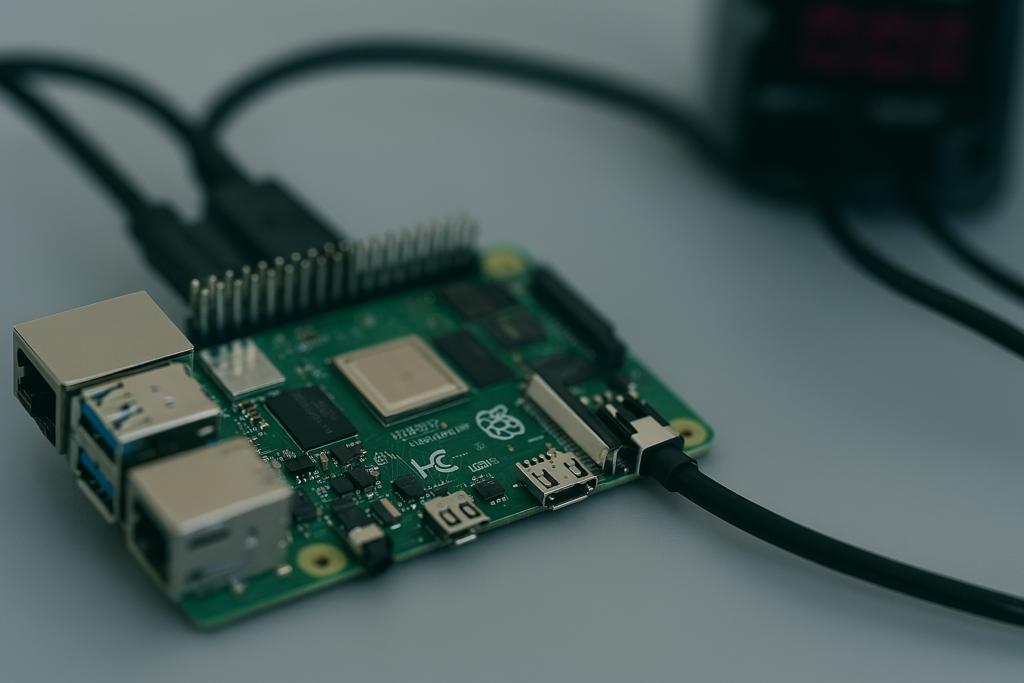
introduced by SigMark signaling on a Raspberry Pi 5. Using an externally powered measurement setup and a con- trolled signaling workload, we measured execution duration and total energy consumption while varying the number of
transmitted SigMark messages. The results show that message transmission introduces a deterministic per-message execution- time overhead of 15.3 ms (95 % CI: [15.0, 15.6] ms), leading to a linear increase in execution duration with message count. Total energy consumption increases correspondingly, with an estimated system-level energy overhead of 0.091 J per message (95 % CI: [0.090, 0.093] J).
The observed overhead is stable across repeated measurements and reflects both the direct energy cost of message processing and the additional baseline energy consumed during extended execution time. These findings demonstrate that SigMark signaling overhead is non-negligible on resource-constrained platforms and should be explicitly accounted for when designing external energy measurement experiments.
Index Terms—External Power Measurement, Alignment Signals, Raspberry Pi 5