
Global Circular Competencies with Urban Mining as a Case
| Projekttitel | Global Circular Competencies with Urban Mining as a Case |
|---|---|
| Projekttype | Anvendt forskning og udvikling |
| Frascati | Ja |
| Tema | Bæredygtighed | Business | Design |
| Teaser | Better utilisation of resource- and waste streams through developing circular competencies, interdisciplinary collaboration, and methods in practice. |
| Status | Afsluttet |
| Ejer | |
| - Akademi | Erhvervsakademi København (EK) |
| - Kontaktperson | Eva Brandt Docent evbr@ek.dk +4526212823 |
| Nat./Int. | Internationalt |
| Projektperiode | 02. januar 2023 - 31. december 2025 |
| Projektbeskrivelse | |
| - Projektresumé | This research project aims to help designers and design students develop circular competencies and their abilities to act sustainably and responsibly as professionals. The project relates to three SDGs: 9, Industry, Innovation and Infrastructure; 11, Sustainable Cities and Communities; and 12, Responsible Consumption and Production. As it is essential that the sustainable transition is global to make a difference, an interdisciplinary and intercultural partnership is established capable of supporting the development of the business sector’s potential. KEA Design (now EK) is the lead partner on the project. In addition, the following four international partners and four Danish partners have contributed knowledge from research and practice, professional sparring, and presentations, as well as design challenges to be explored. International partners:
Danish partners:
The research project is supported by funding from Karl Pedersen og Hustrus Industrifond, Fonden for Entreprenørskab, and EK’s own Frascati research funds. The external funding has made it possible for EK to collaborate with Danish and international partners. In short, the results are:
Below, the main results are elaborated upon, and some of the deliverables are accessible for download.
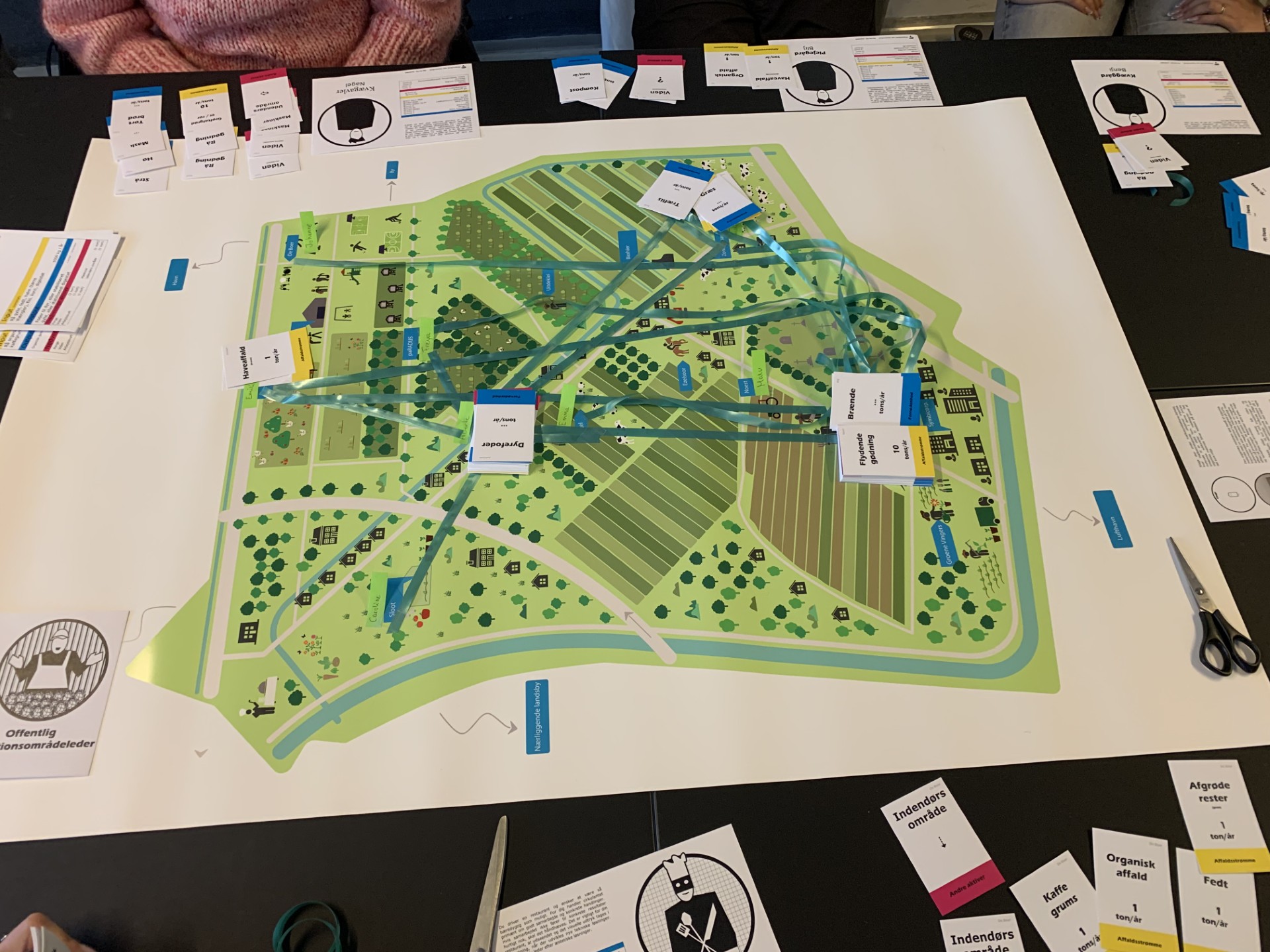
KEA’s International Charrette 2023A major joint effort for everyone in the research project has been to establish a baseline and contribute to an intense international one-week design workshop (a Charrette on Global Circular Competences with Urban Mining) hosted by KEA (now EK) in Copenhagen, October 8-13, 2023. 84 students attended the charrette. They came from 21 different educational programs at 10 institutions across Canada, Brazil, Germany, Austria, the Netherlands, and the UK, as well as EK’s own students. 38 Danish and international teachers and researchers provided talks, supervision, etc., and 10 Danish organisations and companies attended. The research project developed the local design challenges that the students worked with and took part in, and guided the student teams along the way. Focusing on five local urban areas in Copenhagen, the students should explore 1) what kind of resources are available in that area, 2) who are the “users” of the area (citizens, companies, organisations, etc.), and 3) who will make use of any action resulting from the concepts/solutions developed by the group. A detailed description of the charrette 2023, including presentations of the solutions from the student teams, can be found in the idea catalog.
Elective Design Course: Green Change AgentsIn spring 2024, the national and international partners provided inputs on developing an elective course on circular competencies, agency to act, and the green transition based on their research, practice experiences and teaching. This input fed into the creation of the elective, Green Change Agents, which is now part of the Entrepreneur and Design-education at EK. The Green Change Agents elective aims to teach students how to drive sustainable change in companies through circular economy, systems thinking, and hands-on collaboration with real companies. Over six weeks, students collect data, map resource flows, facilitate workshops, etc. to help real businesses become more sustainable. The instructors of the course in 2024 are Snorre Näsman, Ditte Dam Bangsund, and Eva Brandt, in combination with presentations by Danish and international specialists. A detailed description of the course can be found in the idea catalog.
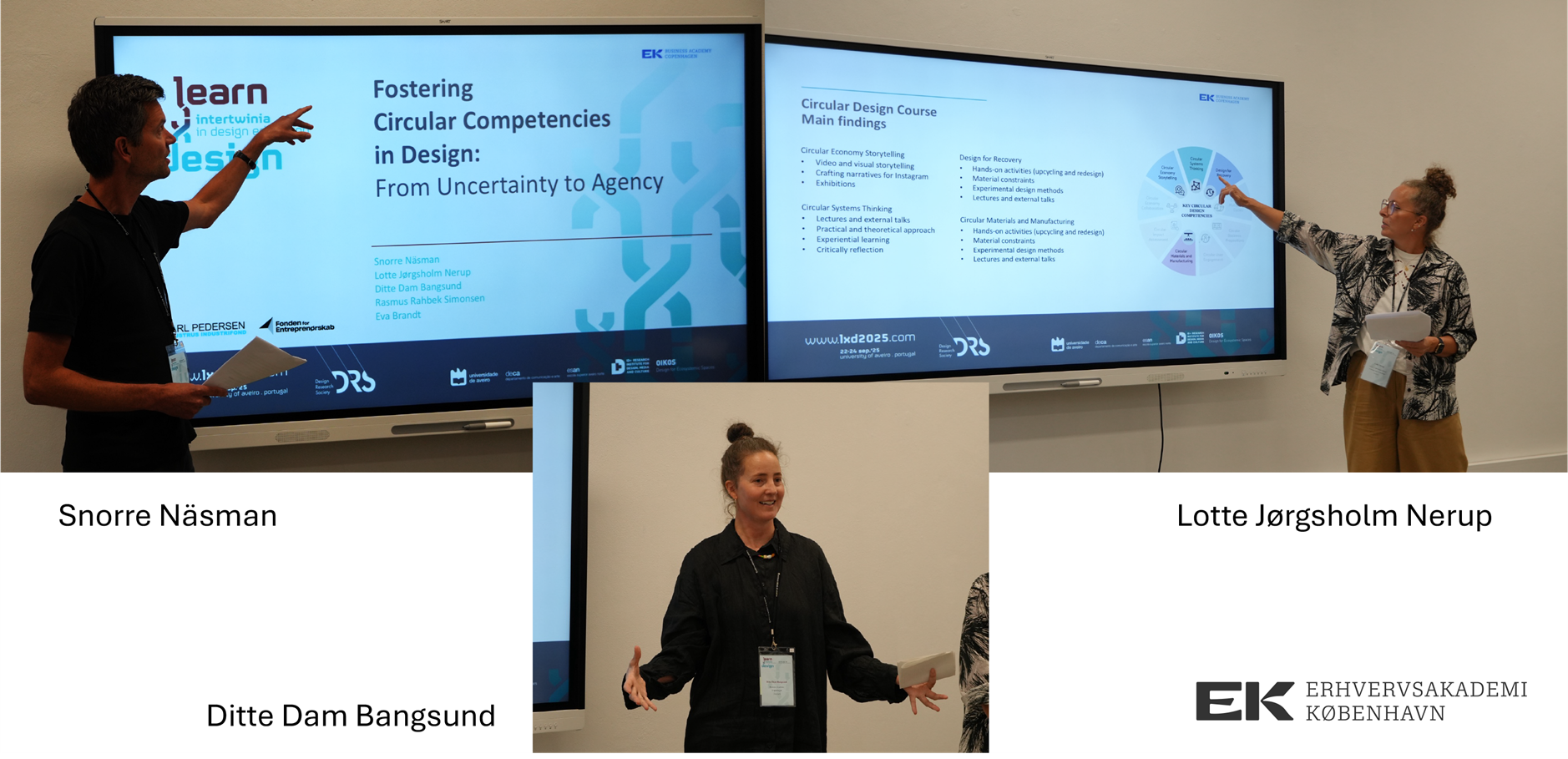
Scientific peer-reviewed articleDrawing on an analysis of the course development and teaching experiences of the Green Change Agents course and the Circular Design (another EK elective) an article was written and accepted as full paper based on peer-review. The article Fostering Circular Competencies in Design: From Uncertainty to Agency was presented at the Learn x Design conference, hosted by the University of Aveiro, Portugal, on September 22-24, 2025. The authors are: Snorre Näsman, Lotte Jørgsholm Nerup, Ditte Dam Bangsund, Rasmus Rahbek Simonsen, and Eva Brandt (all from EK). The article draws upon Tony Fry’s notion of “sustain-ability” to challenge traditional discourses on sustainability, advocating for a new paradigm that recognises the finite nature of resources and the significance of ethical design interventions. It addresses the pivotal role of design educators in equipping students with the necessary capabilities to effect change in a circular economy in practice. By highlighting the importance of incorporating a circular mindset within design education, two design courses at EK are examined. One course aimed at developing circular fashion product designers, capable of enhancing material longevity; the other course focused on designers as “change agents” who can guide companies towards sustainable and circular business models. The research reflects on the integration of hands-on design competencies within the curricula of the two courses, in alignment with two different frameworks for sustainability competencies. The research illuminates the ways in which specific educational elements foster sustainable competencies, preparing students to become agents of sustainable change in the design profession.
Scientific article: EK news:
Catalog of Ideas for Developing Courses and Circular CompetenciesThe catalog of ideas for developing courses and circular competencies within higher education is a comprehensive compilation of educational strategies, institutional practices, and collaborative student projects centred around the themes of circular economy and urban mining. It is produced within the partner network of the research project. The executive summary (12 pages) refers to many appendices where more details can be found. In all, the publication is 1127 pages. The catalog compiles the following project deliverables: 1. A baseline on sustainability, and teaching circular economy and urban mining at different European educational institutions. 2. A comprehensive documentation of the International EK Charrette 2023 on global circular competencies with urban mining, including suggestions for solutions in local urban contexts involving local companies. 3. Ideas for developing an elective course for EK design, focusing on developing circular design competencies. 4. A detailed description of the resulting elective course,’ Green Change Agents’, for students at KEA Design.
Executive summary: Executive summary and table of content Catalog of Ideas Circular Competencies EK 2025 Appendixes: App_1_and_2_Catalog_of_Ideas_Circular_Competencies_EK_Dec_2025 App_3.1-3.3_Catalog_of_Ideas_Circular_Competencies_Appendix_EK_Dec_2025 App_3.4-3.5_Catalog_of_Ideas_Circular_Competencies_Appendix_EK_Dec_2025 App_4_Catalog_of_Ideas_Circular_Competencies_EK_Dec_2025 App_5_and_6_Catalog_of_Ideas_Circular_Competencies_EK_Dec_2025
Final Event: Circular Design Competencies that Create Sustainable Change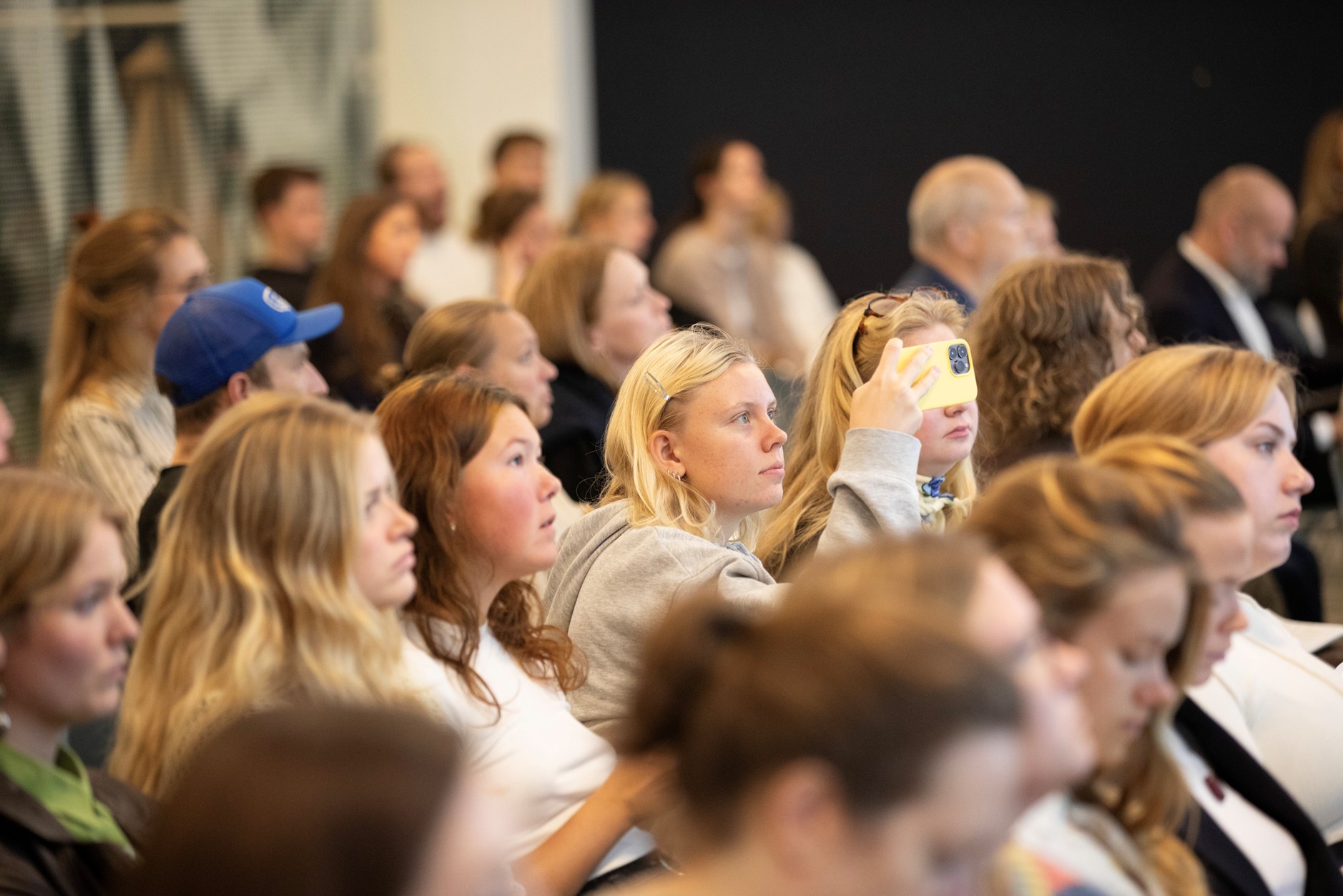
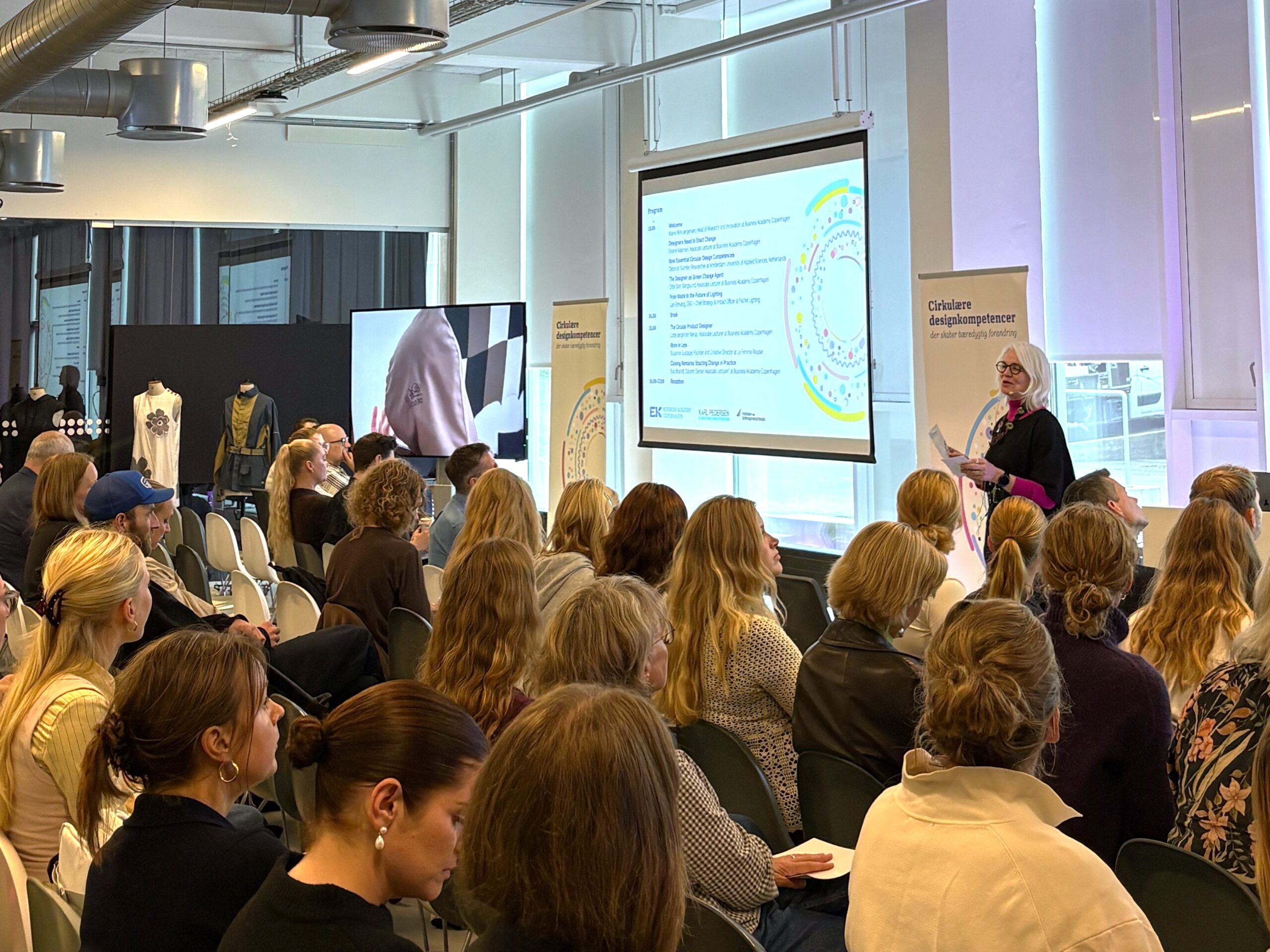
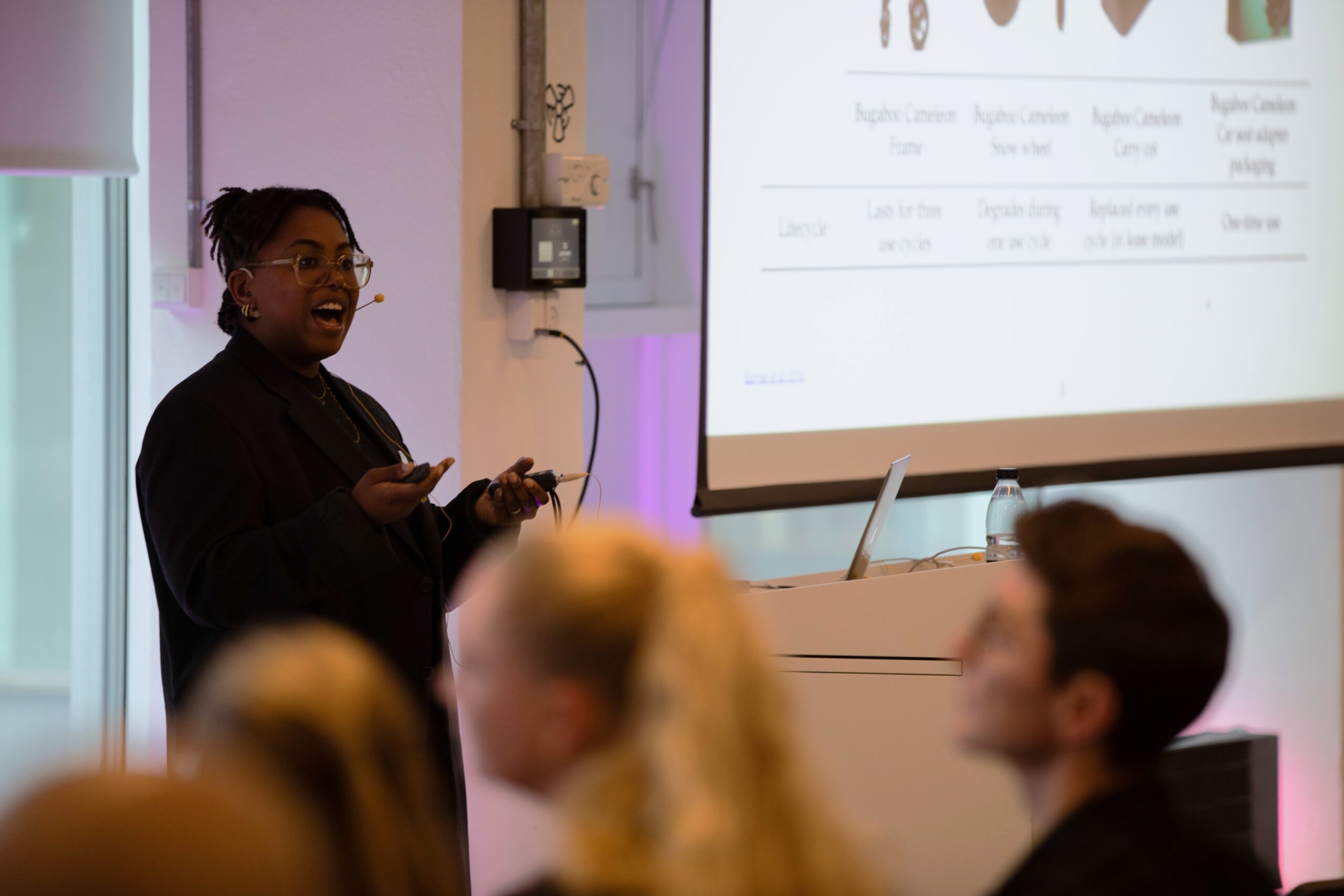
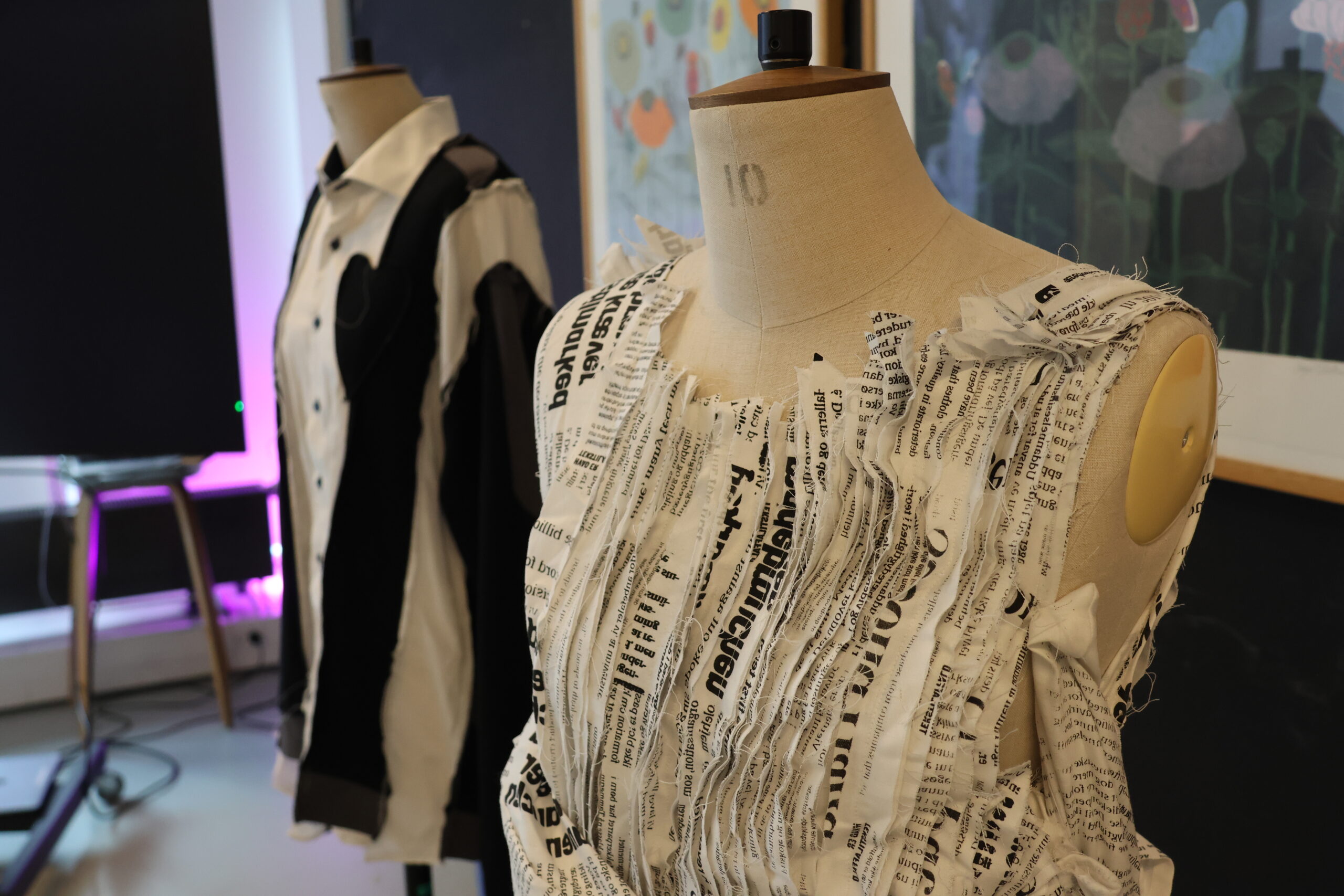
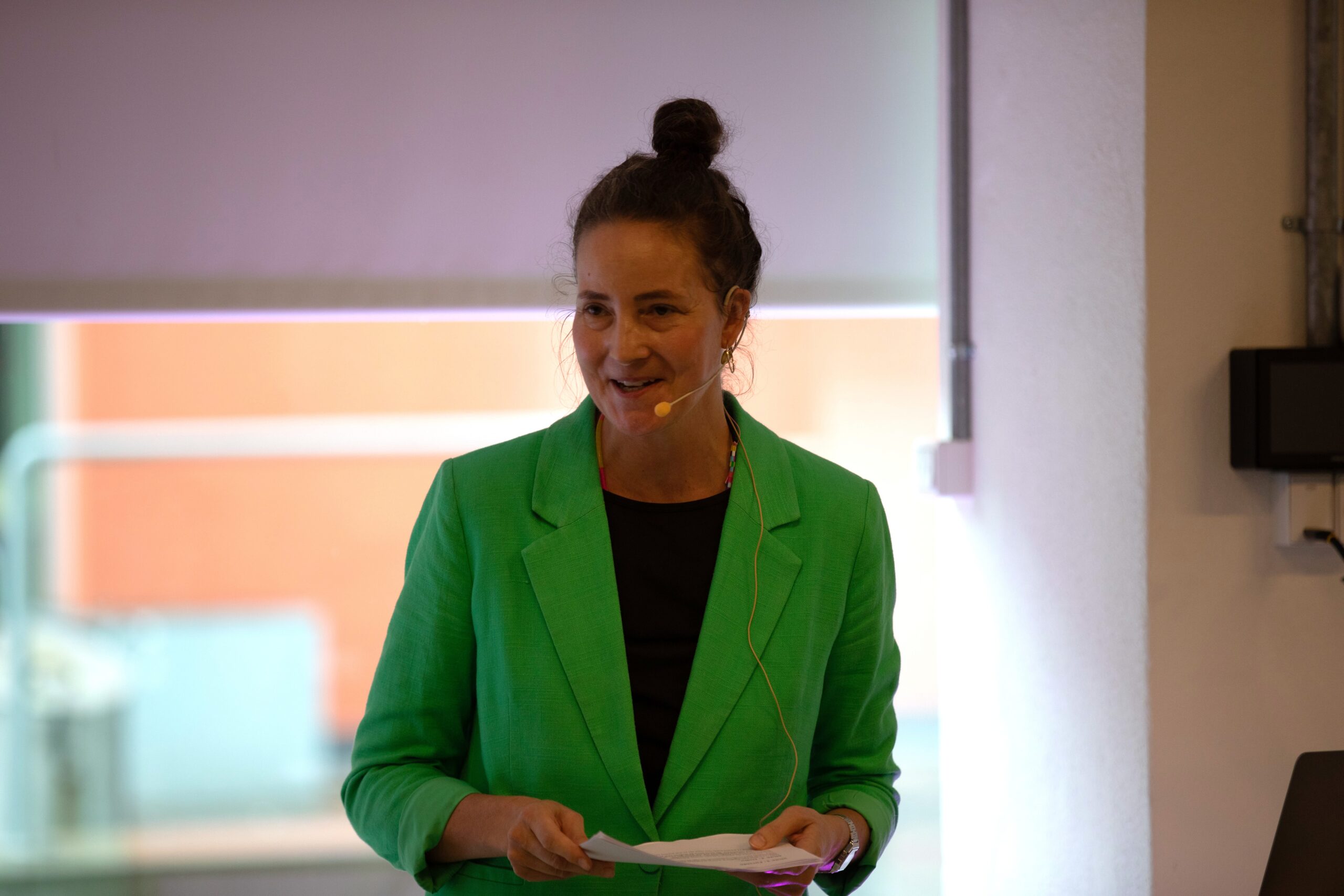
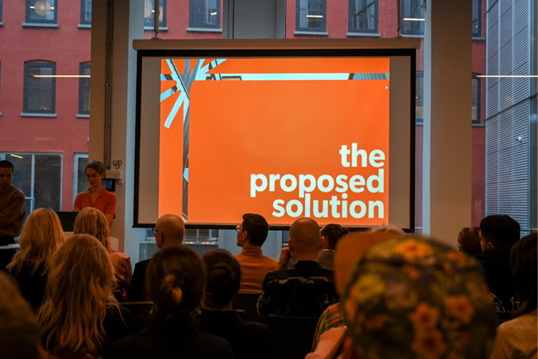
The final event was held on October 8, 2025, at EK in Copenhagen. More than 160 companies and students signed up to hear about the research results, the 9 circular design competencies that international research indicates are central to the green transition (Sumter et al. 2021), and two presentations from Danish companies who shared their experiences of working strategically and creatively with circularity in their companies. The external speakers were: Founder and creative director Susanne Guldager from La Femme Rousse, chief strategy & impact manager Lars Elmvang from Fischer Lighting, and researcher Deborah Sumter from Amsterdam University of Applied Sciences. The presenters from the EK project team were: Associate lecturer Snorre Näsman, associate lecturer Ditte Dam Bangsund, associate lecturer Lotte Jørgsholm Nerup, and senior associate lecturer Eva Brandt. Program: Circular Design Competencies that Create Sustainable Change The Presentations of the day: All slides from the presentations below can be downloaded here
|
| - Baggrund og formål | |
| - Aktiviteter og handling | |
| - Projektets Metode | . |
| - Projektets Forventede Resultater | |
| - Projektets Forventede Effekt | |
| Tags | |
| Deltagere | |
| - Studerende | |
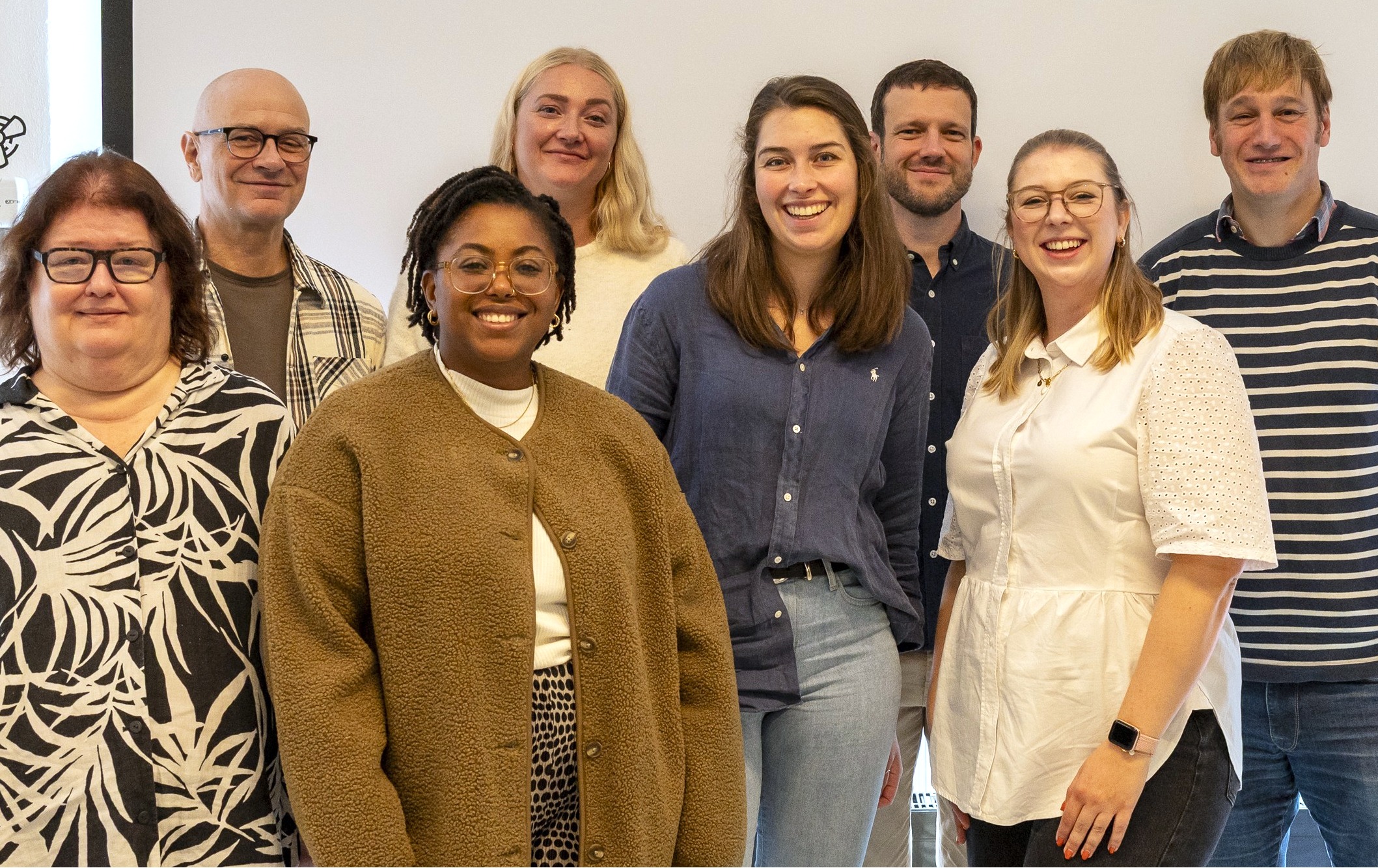
| - Medarbejdere | Erhvervsakademi København (EK) Eva Brandt (project lead in 2024 – 2025)Ditte Dam Bangsund (2024 – 2025)Lotte Jørgsholm Nerup (2024 – 2025)Snorre Näsman (2024 – 2025)Emilie Victoria Ferraro Steuch (2024 – February 2025)Rikke Sigmer Nielsen (March 2025 – December 2025) Københavns Erhvervsakademi (KEA) Rasmus Simonsen (2023, project lead) |
| - Virksomhedsrepræsentanter | |
| - Andre | |
| Partnere | |
| Finansiering | |
| Resultat | |
| Evaluering | |
| Formidlingsform | |
| - Resultatets formidling | |
| - Resultaternes værdi | |
| - Målgruppen | |
| - Publikationer | Peer rev. Artikel Rapport |